Our success is powered by your generosity
When you give monthly, you become part of the team that keeps the Ballona Wetlands thriving all year long.
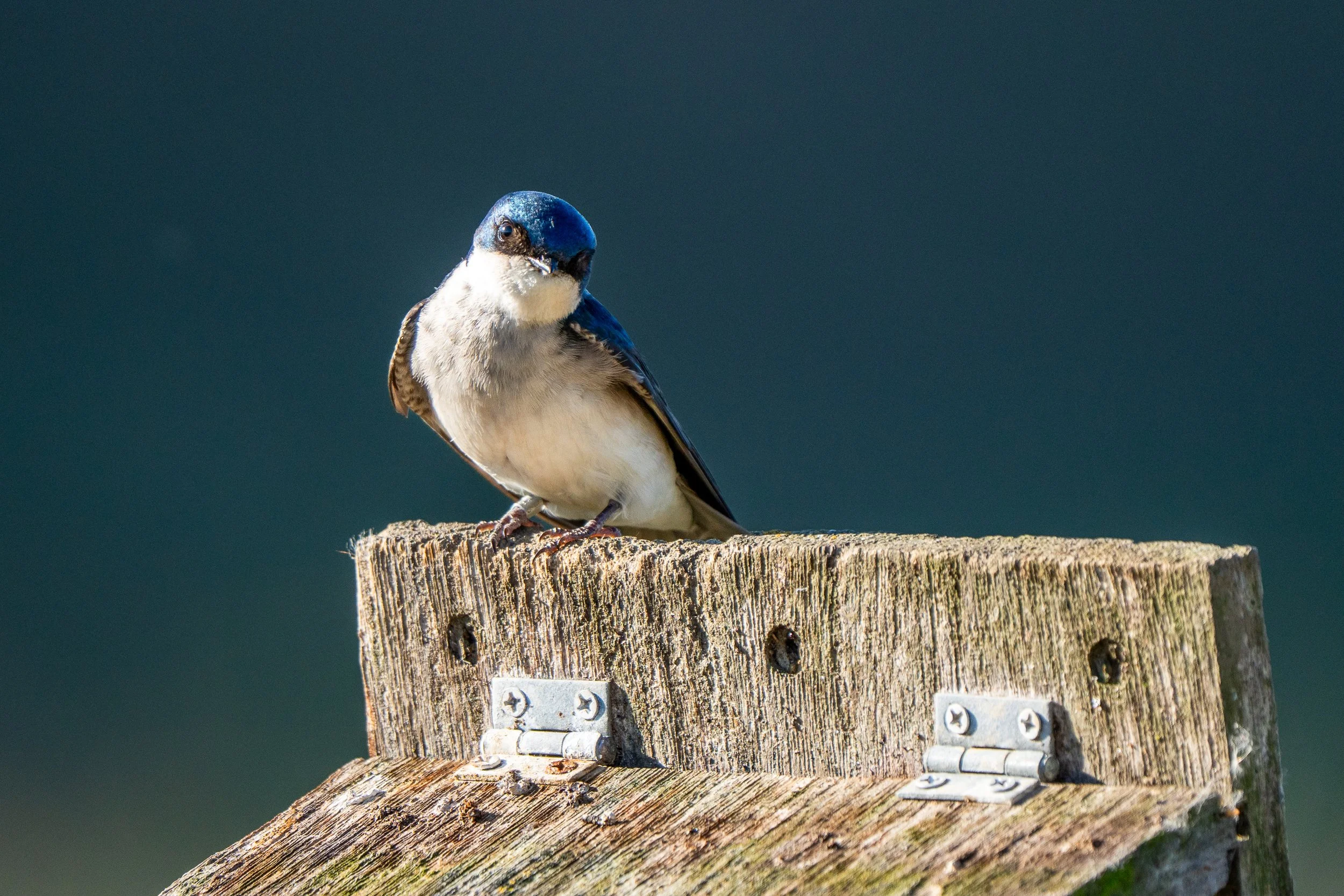
“My time at Ballona taught me the importance of protecting wildlife, which inspired me to pursue a career in conservation.”
– Rebecca Finley, Tree Swallow Monitoring Intern
Dear Friend of the Friends,
With El Niño strengthening as winter approaches, Southern California faces the looming threat of heavier storms. It’s a timely reminder that nature can help protect our communities, and that the future of our coast depends on the choices we make today.
Long before roads, homes, and concrete covered our landscape, wetlands absorbed and slowed stormwater, buffered our coastline, and supported an extraordinary diversity of life. Thanks to the vision of our indomitable founder, Ruth Lansford, and supporters like you, Ballona Wetlands Ecological Reserve remains a precious remnant of that natural landscape. The California Dept of Fish and Wildlife’s proposed Restoration Project offers an opportunity to reconnect Ballona Creek, the wetlands, and the ocean, supporting biodiversity and building a more resilient Los Angeles.
But protecting Ballona isn’t just about the landscape. It’s about people.
In the pages ahead, you’ll meet the people bringing our mission to life: students discovering the wonders of nature, interns documenting restoration progress, volunteers getting their hands dirty, and community partners working together to protect this extraordinary place.
We cannot control the storms, but we can choose to restore the natural systems that help our coast thrive.
As you read these stories, I hope you’ll see the impact of your generosity and what we can accomplish together. Your support makes this work possible, helping us protect and restore Ballona while inspiring future generations to care for it.
Please make a year-end donation to Friends of Ballona Wetlands to help ensure this extraordinary place thrives for generations to come.
Thank you for standing with us!

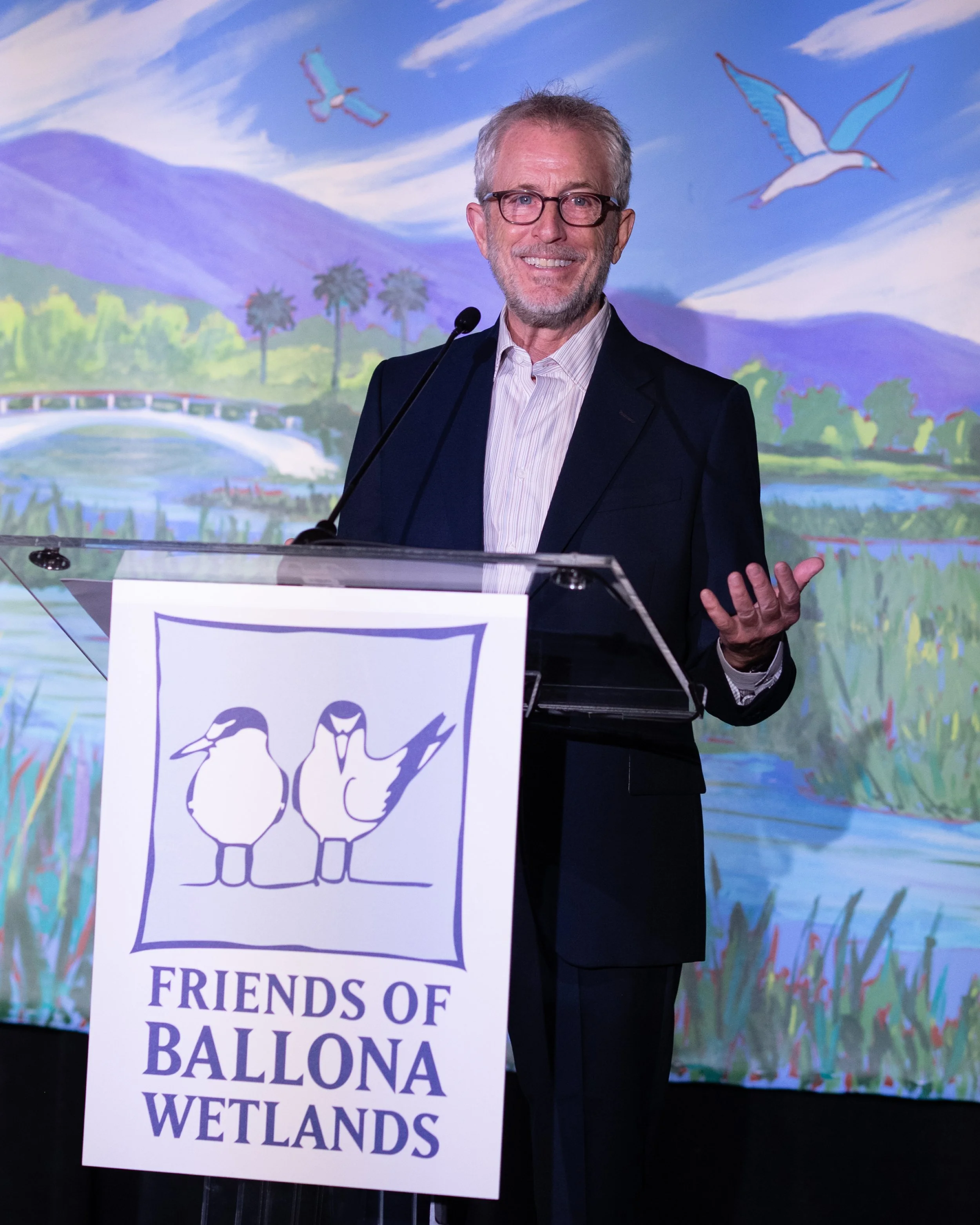
Scott Culbertson
Executive Director
PS: We hope you’ll visit Ballona soon to see the impacts of your generosity.
Help us continue the important work that Ruth started 48 years ago.
SHOWING THEIR STRENGTH
By Carolyn Everhart, Director of Education
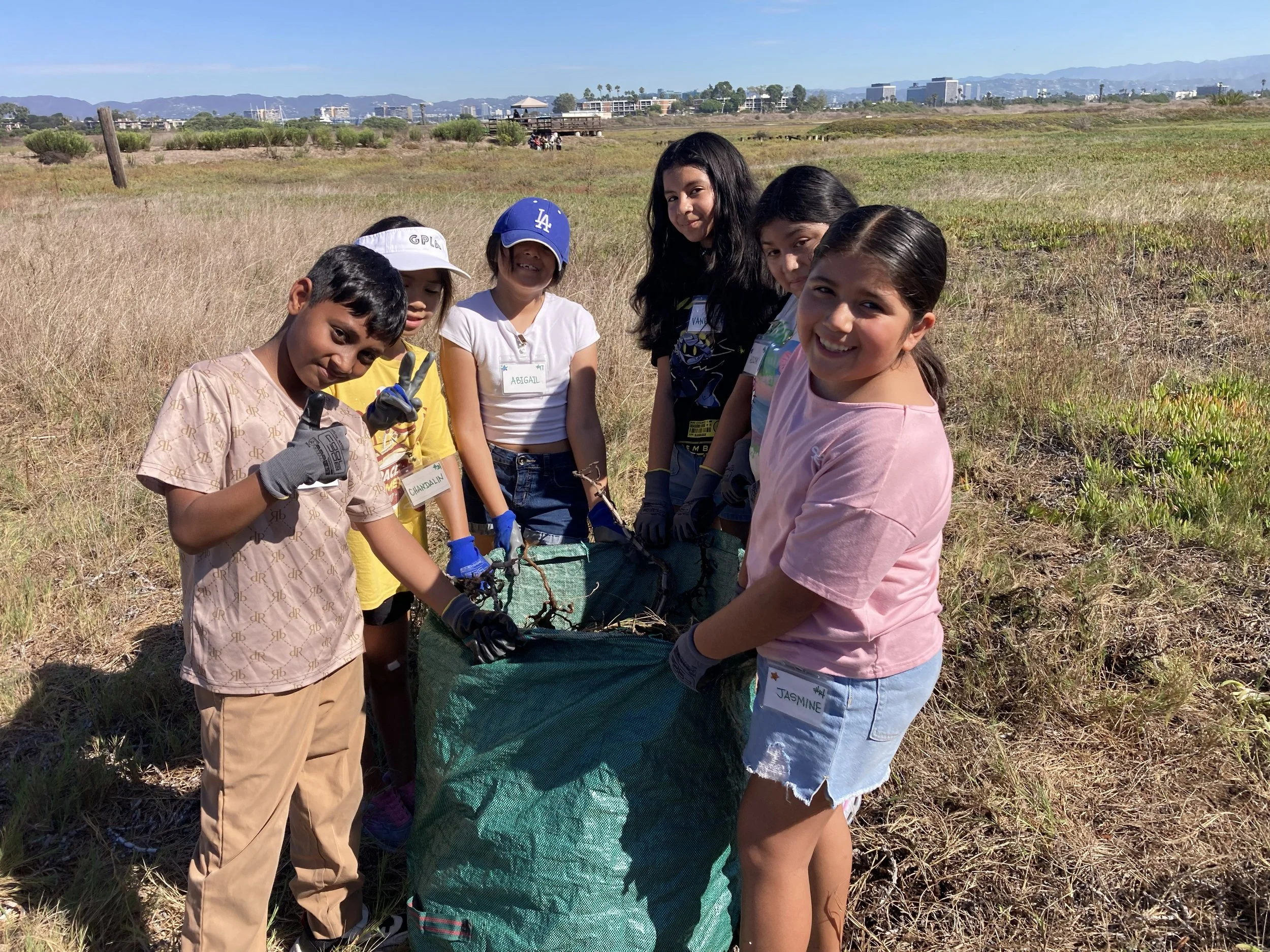
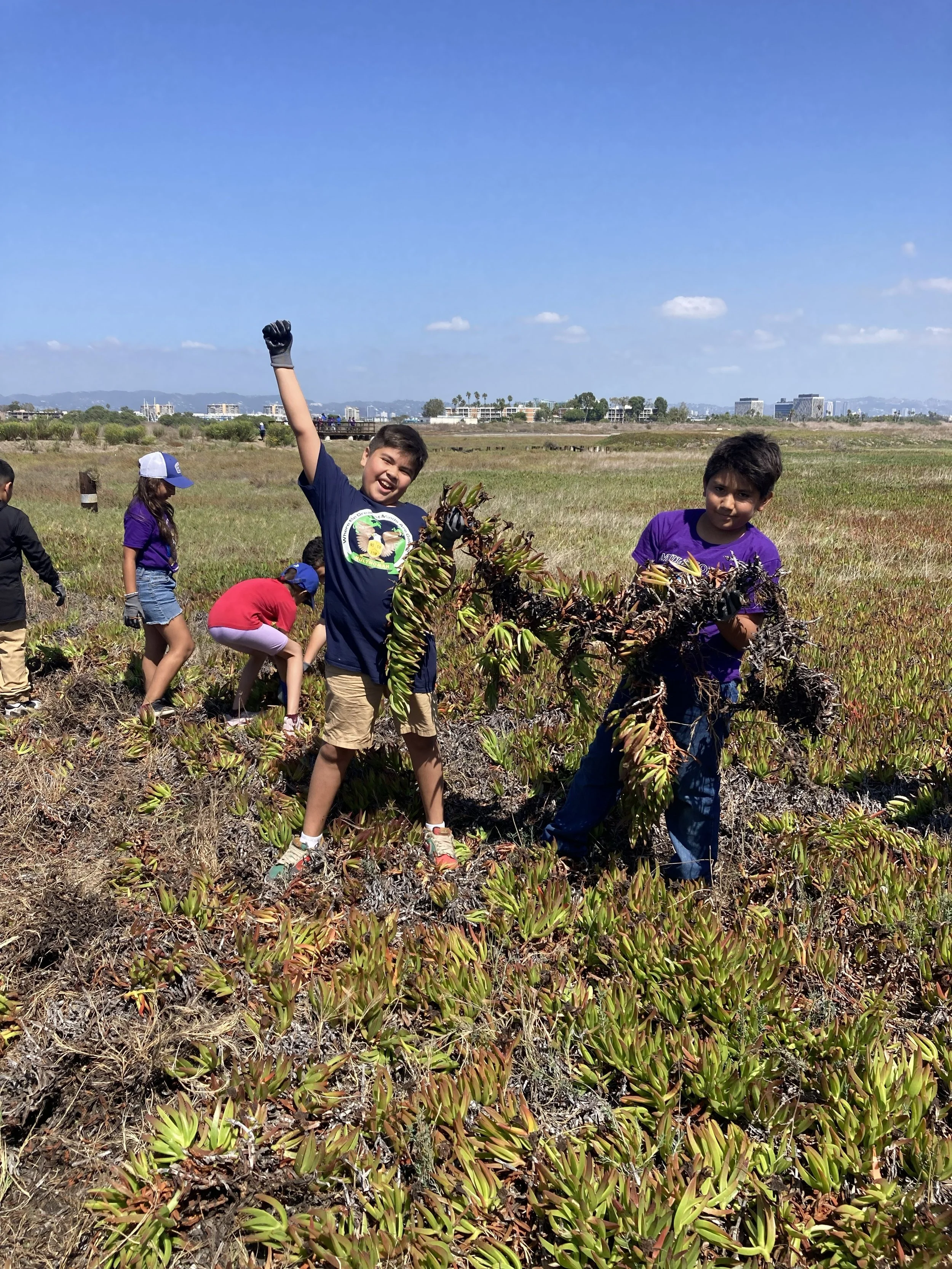
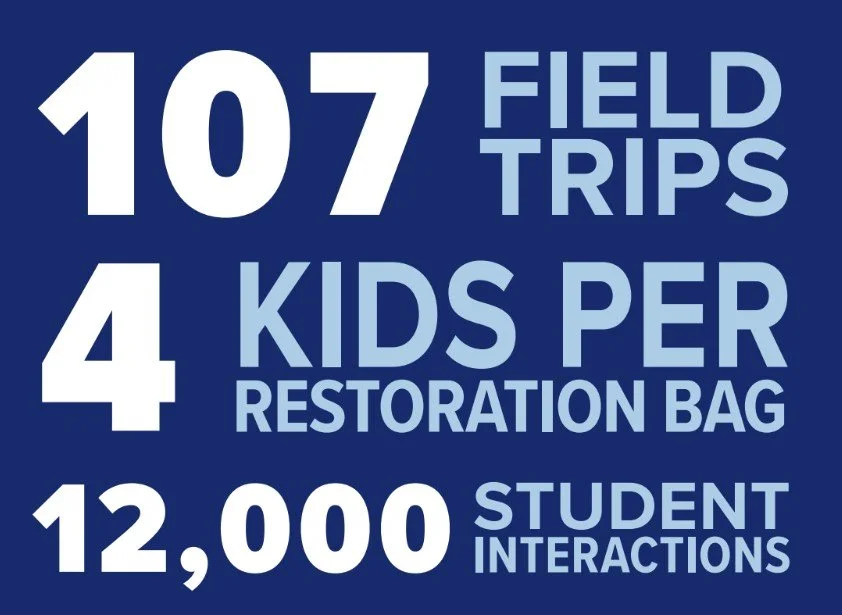
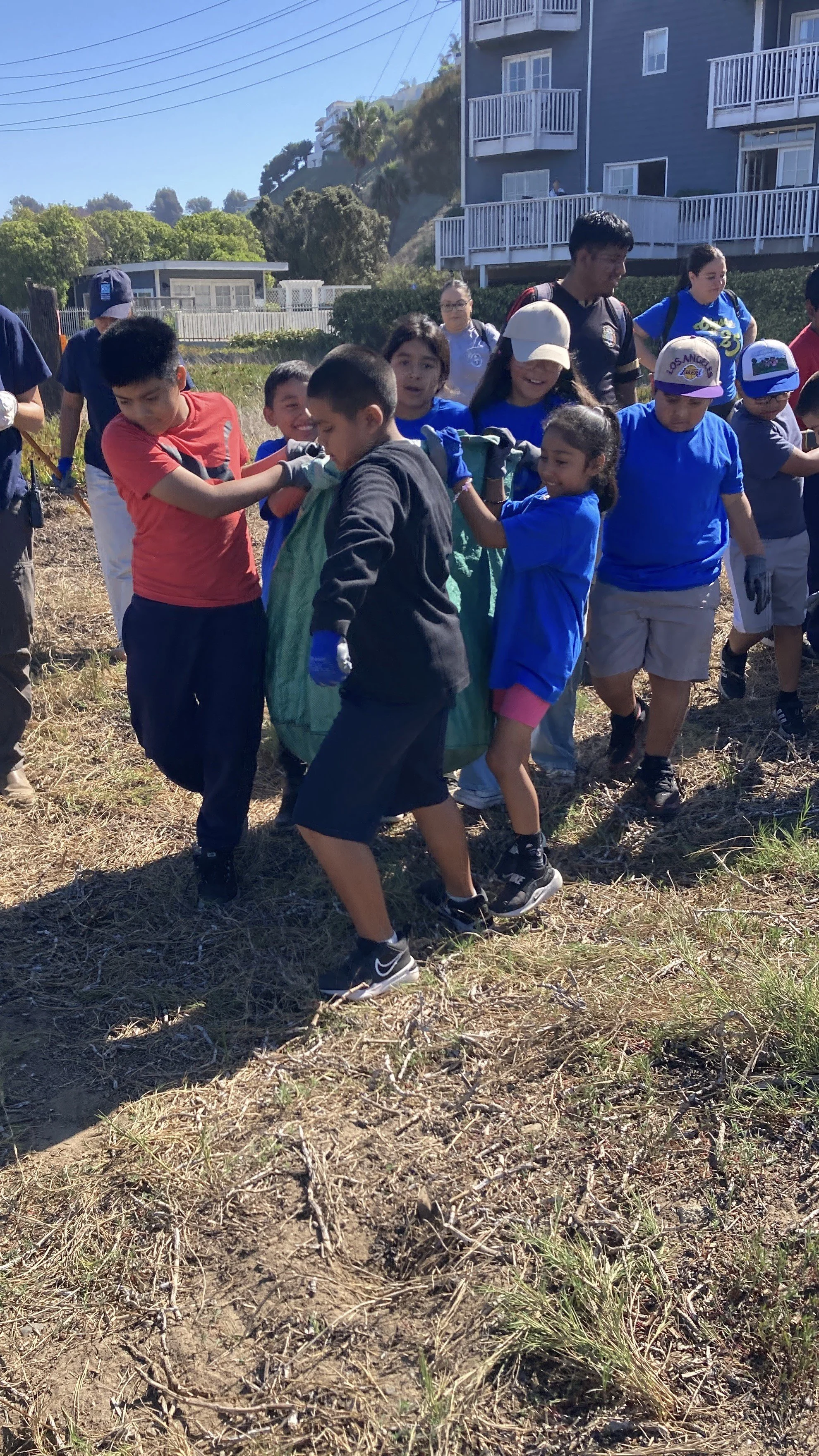
I have a confession to make... I like iceplant. Well, actually, I like seeing kids removing iceplant. Iceplant is a non-native, invasive plant that covers sections of Ballona Wetlands Ecological Reserve and harms the habitats where it grows. Students on Explore Ballona! field trips often help remove iceplant at the restoration station, and they LOVE IT!
From 2nd to 12th grade, students love pulling the heavy, tangled plant from the earth. Students hold it over their heads in victory and, when there is an especially challenging clump, call on their classmates to give it a collective “heave-ho.” Other invasive plants the students remove are simply less exciting (sorry, crown daisy). In our post-trip classroom lessons, pulling iceplant is often a favorite memory alongside wildlife sightings.
With its unique look and incredibly heavy bulk, the challenge is part of the joy for the students. I look forward to the day Ballona Wetlands is fully restored, but along the way, I will enjoy every smiling face and every growl as students pull out iceplant. To see students excited to get their hands dirty and work together toward a better tomorrow - now that’s something worth celebrating.
MEASURING SUCCESS – ONE TRANSECT AT A TIME!
By Olivia Jenkins, Manager of Scientific Programs
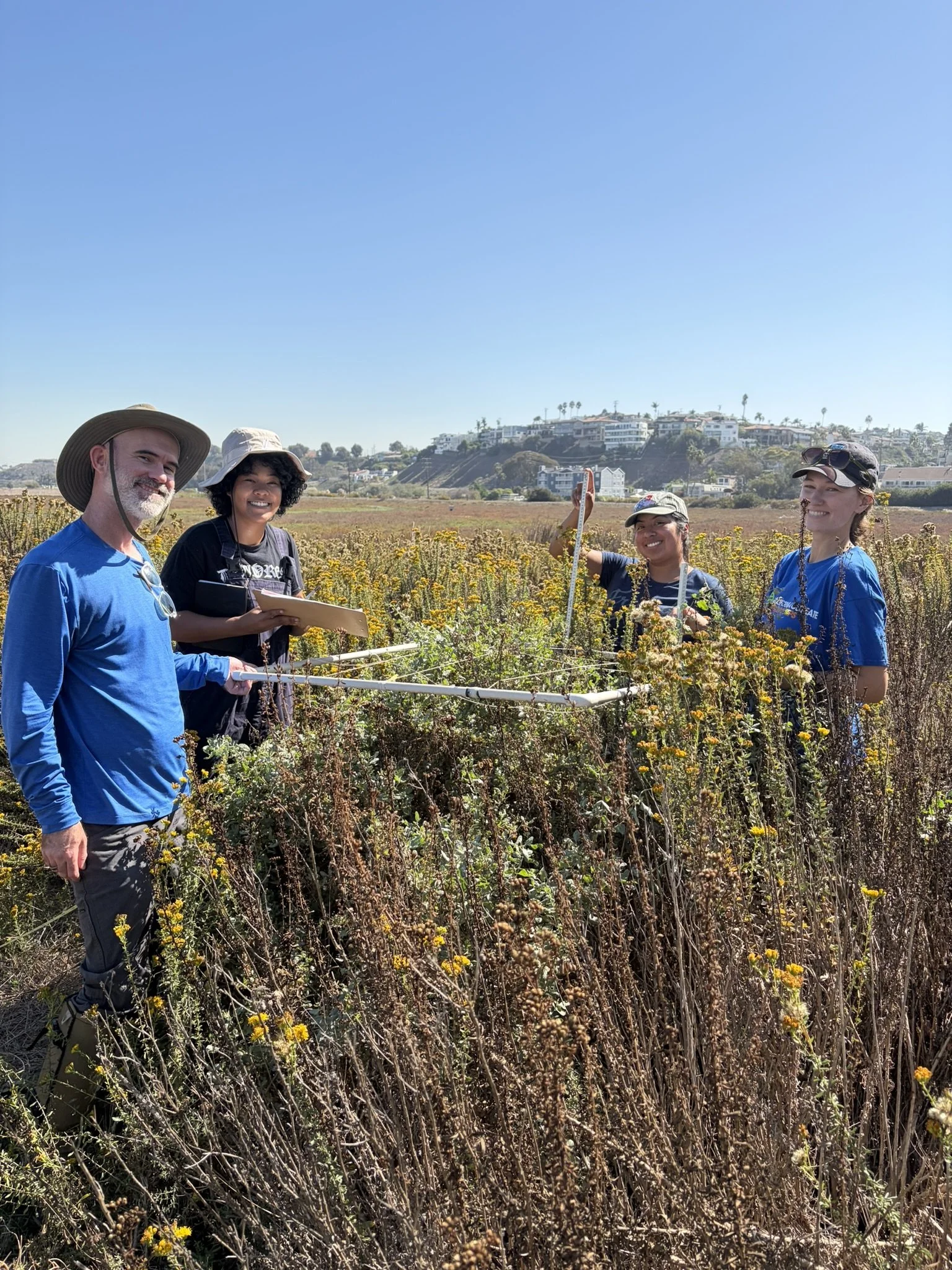
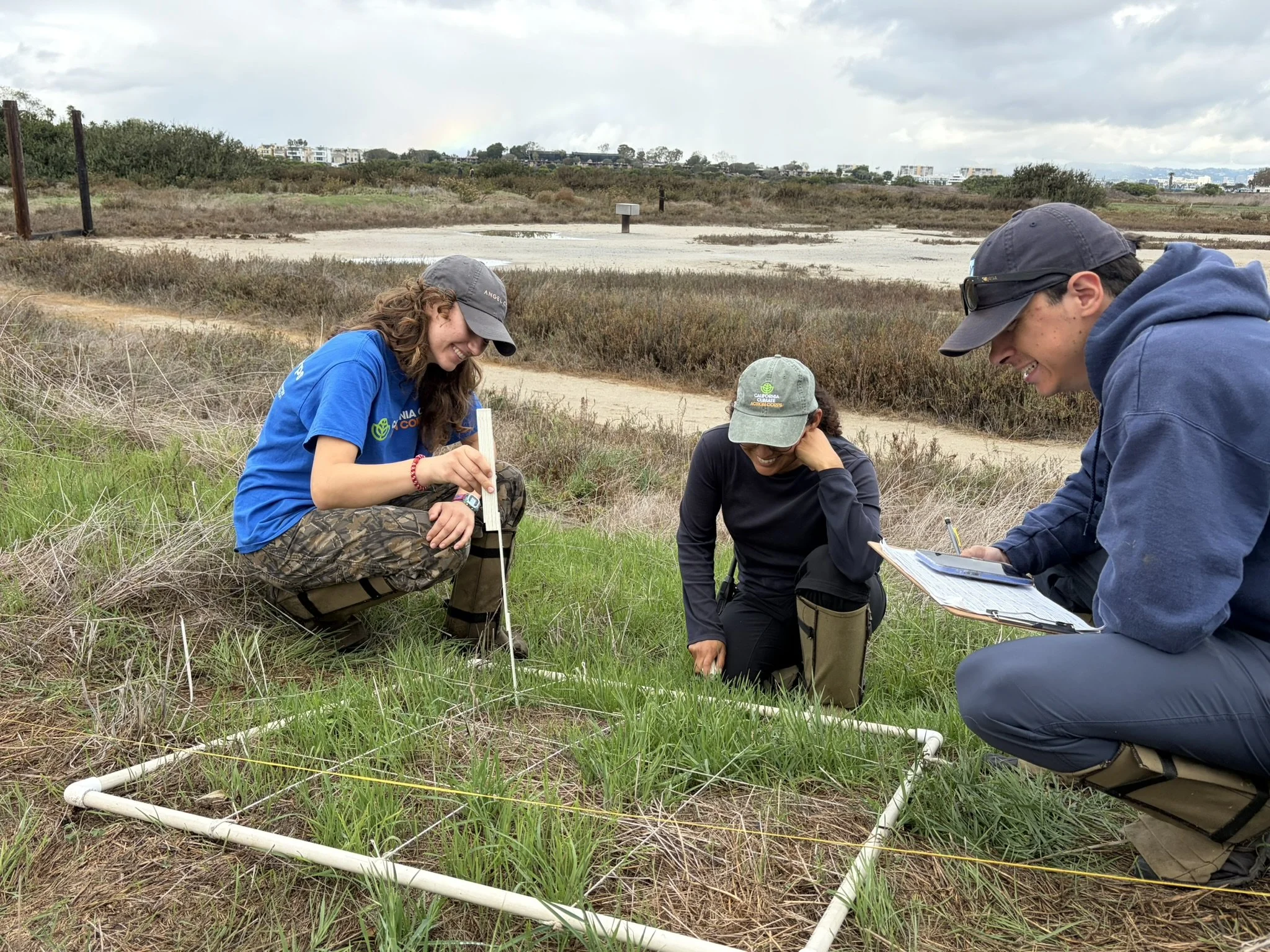
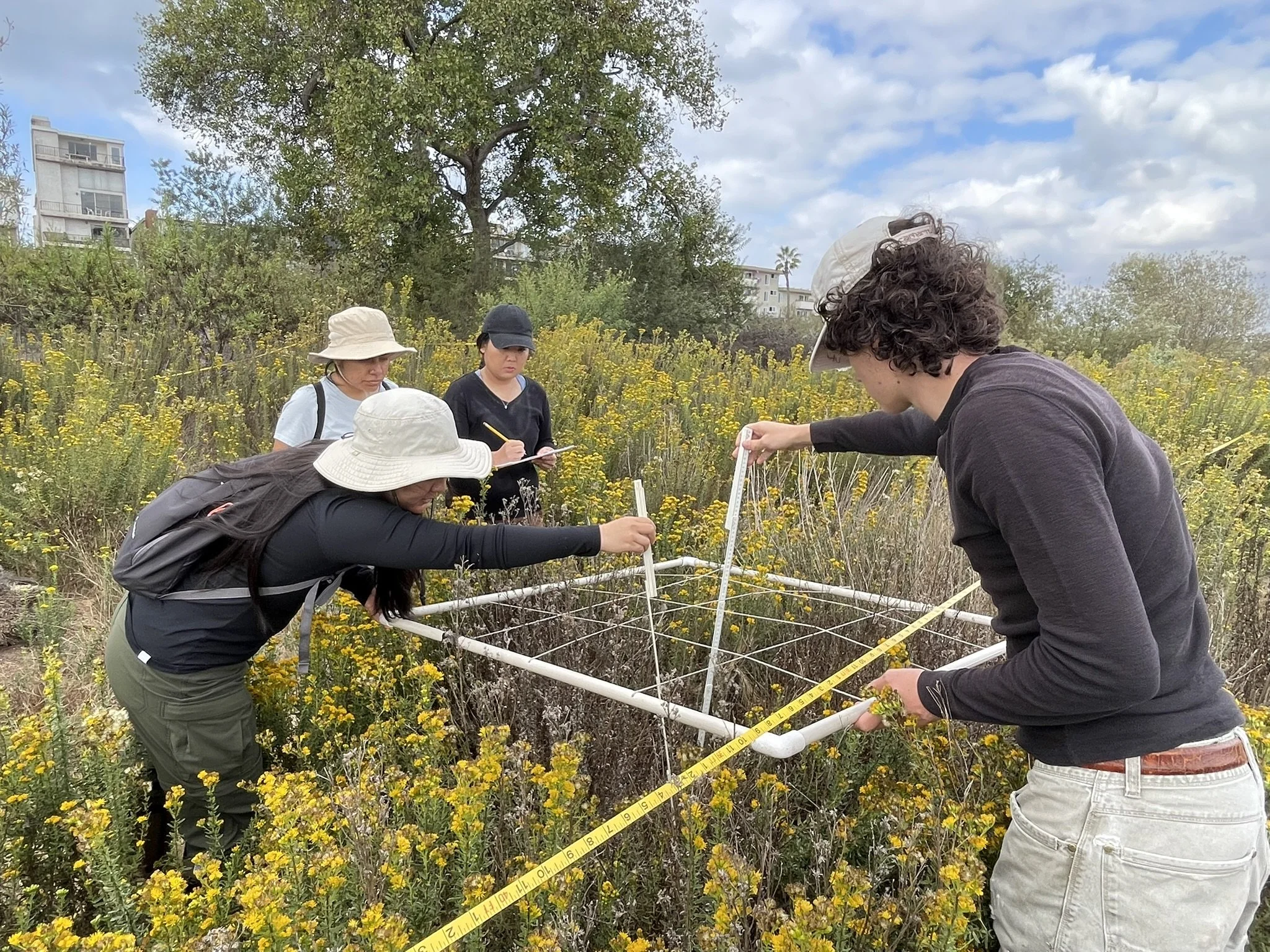
On a sunny October morning, four interns huddle around a square PVC pipe frame, peering down at the plants below. One student excitedly points out a native sprout, recognizing its needle-like leaves and reciting its scientific name (“Ericameria ericoides!”) for the data collector, who stands poised with clipboard, datasheet, and calculator. They stop at seven precise locations along a 25-meter measuring tape extended across the native dune restoration site, carefully noting each plant species and estimating its percent cover within the PVC square.
They are surveying just one of 24 permanent survey lines (“transects”) that together provide a representative sample of habitat health, enabling us to track restoration progress over time. These twice-yearly surveys also provide essential data that guides daily restoration efforts, ensuring our work is targeted and effective.
Just three years ago, a different group of interns was surveying in the same spot, but the landscape was completely different: sparse bare ground dotted with non-native weeds. Today, the site is so dense with native flora, the fuzzy caterpillar-shaped blooms of the Branching Phacelia (Phacelia ramosissima) abuzz with pollinators, that the students have to be careful where they step.
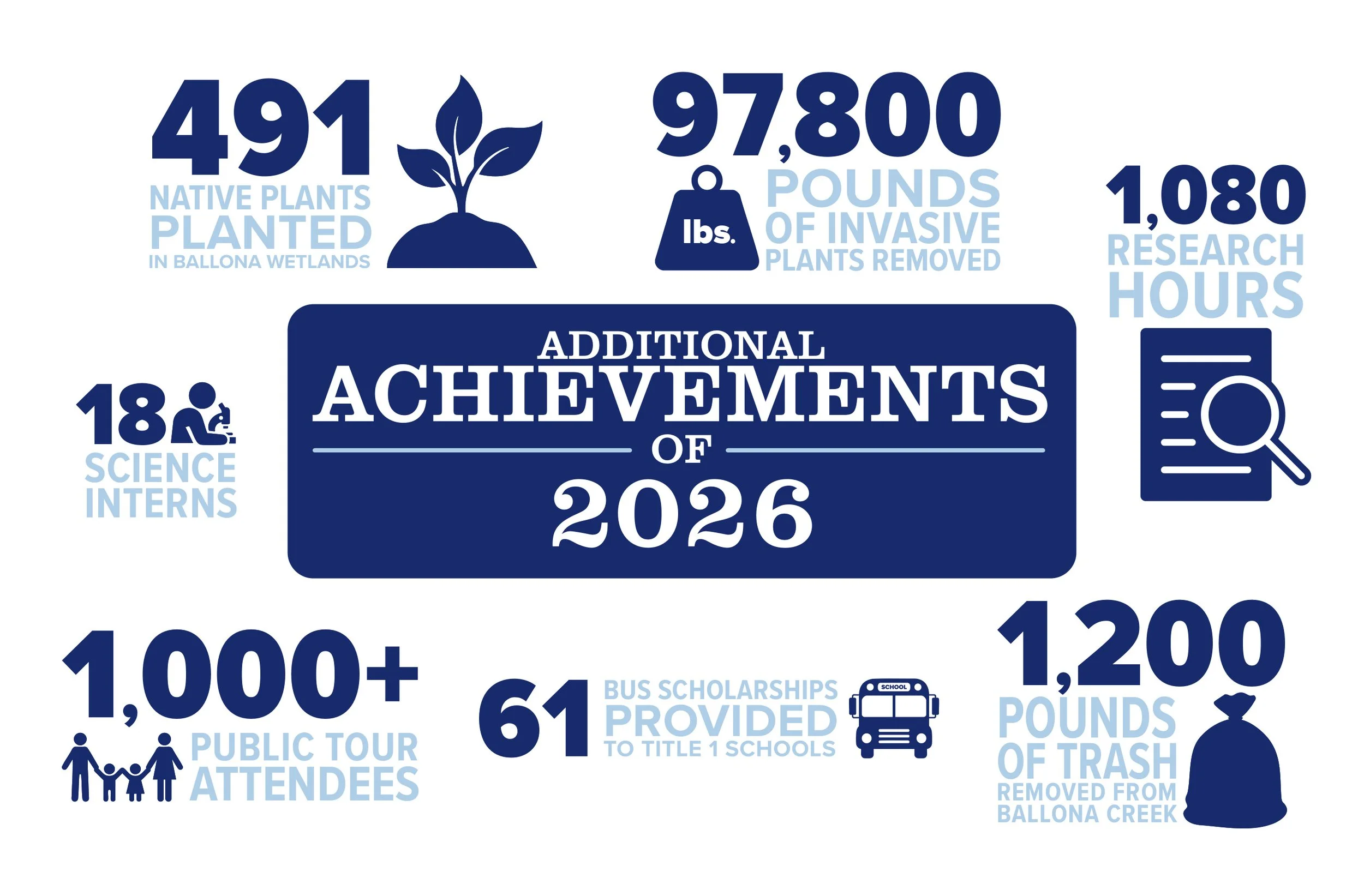
Their survey data shows a remarkable ecosystem transformation. Over six years, relative native plant cover at this monitored site more than doubled from 36% in 2020 to 98% in 2026, while invasive plant cover dropped from 56% to just 1%, proving what sustained, science-based restoration can achieve!
Each spring and fall, our interns receive hands-on training in standardized plant survey methods, gaining essential field skills while learning to identify over fifty local plant species. Your support helps us grow the next generation of environmental stewards who understand science as a powerful tool for positive change.

PROTECTING MONARCHS – AND OUR COMMUNITY
By Patrick Tyrrell, Director of Habitat Restoration and Upper Education
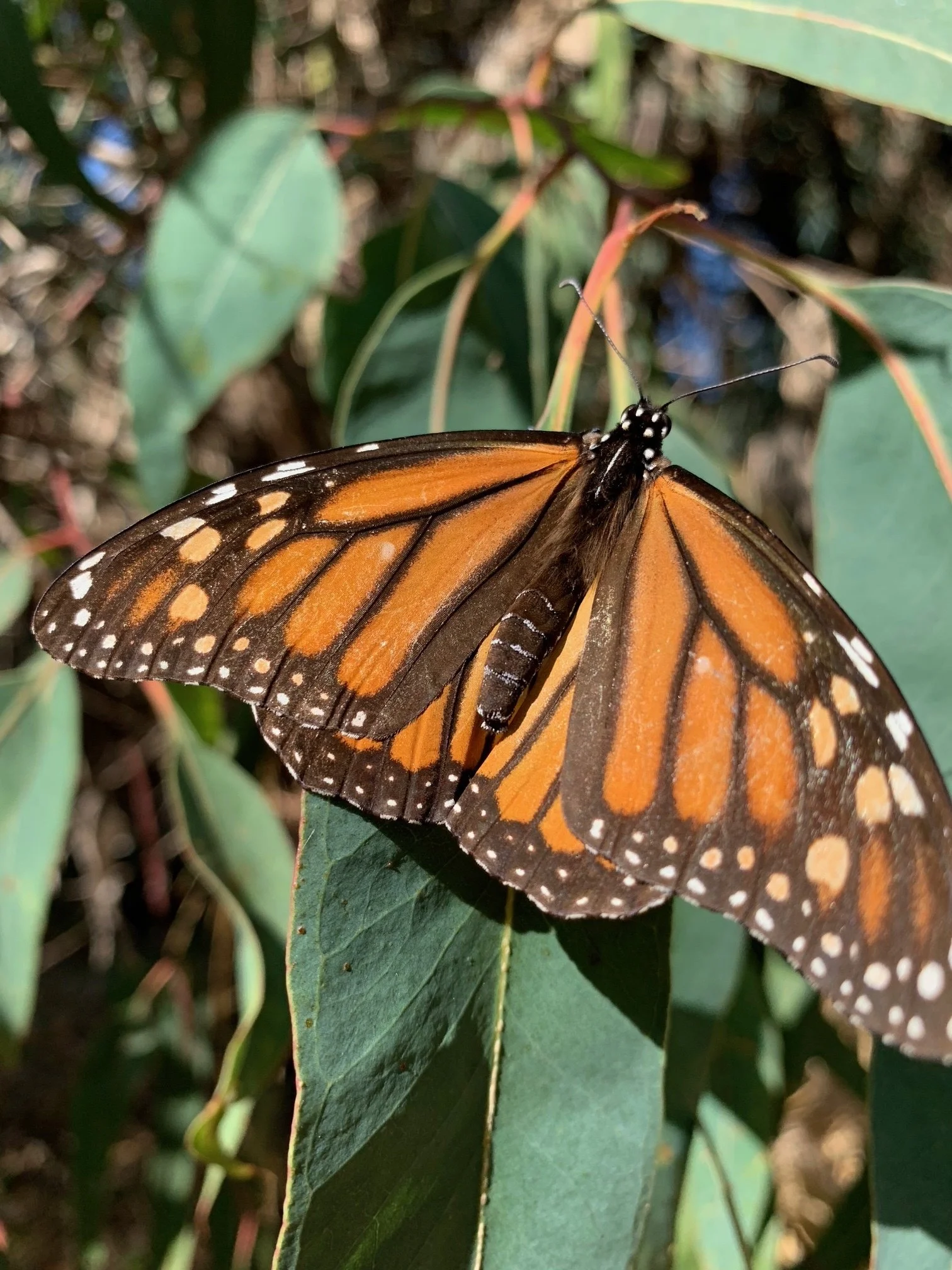
Many of you are aware of the iconic migration of Monarch butterflies across North America, but did you know that part of that journey includes the Ballona Wetlands?
Ballona provides critical habitat for an abundance of amazing wildlife, and its eucalyptus grove serves as an overwintering site for western Monarch butterflies. Each year, Monarchs migrate to coastal California to shelter in eucalyptus groves like ours, relying on their unique microclimates to survive the cool winter months. As western Monarchs continue to decline, protecting their overwintering sites has only increased in importance.
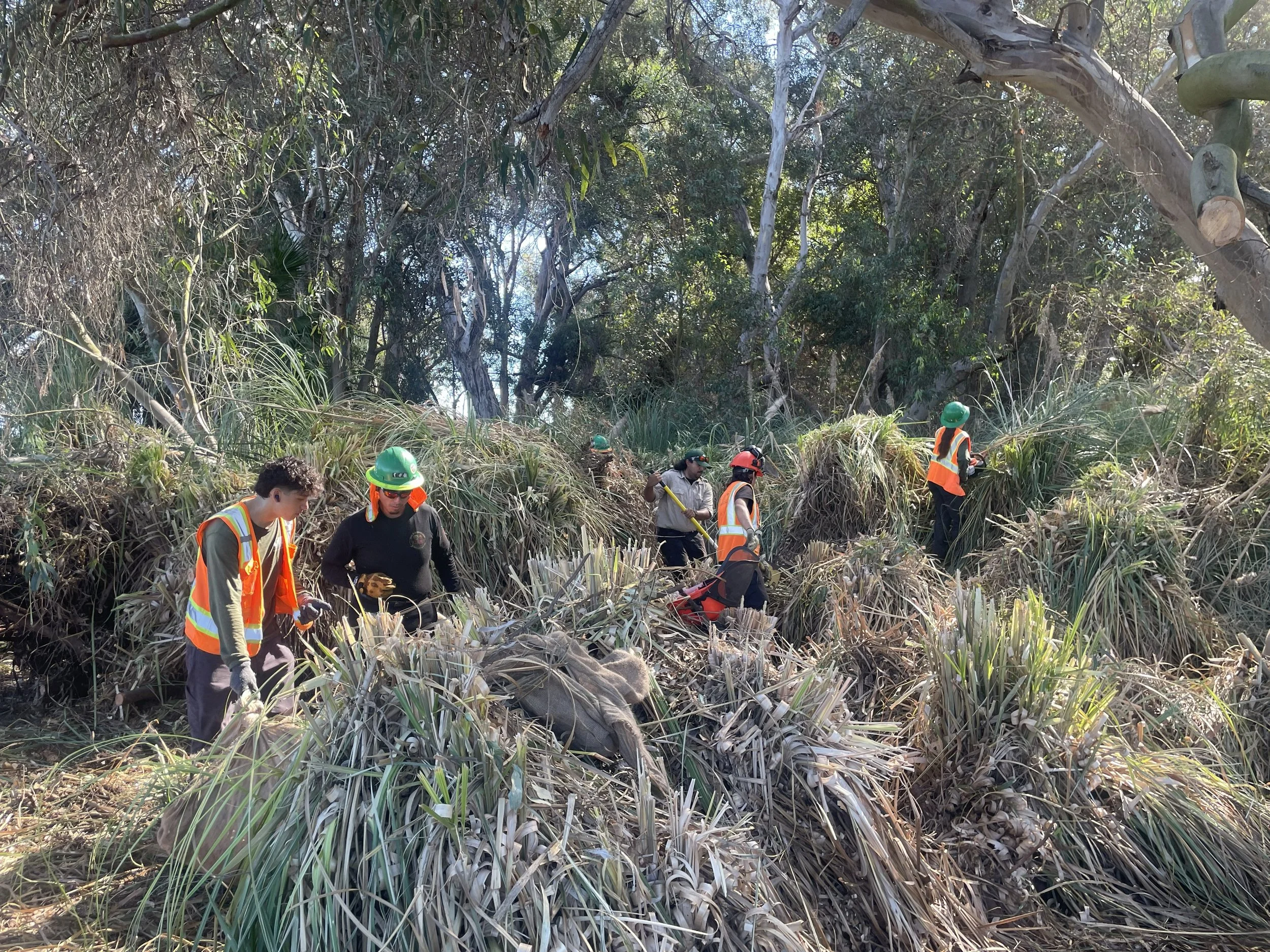
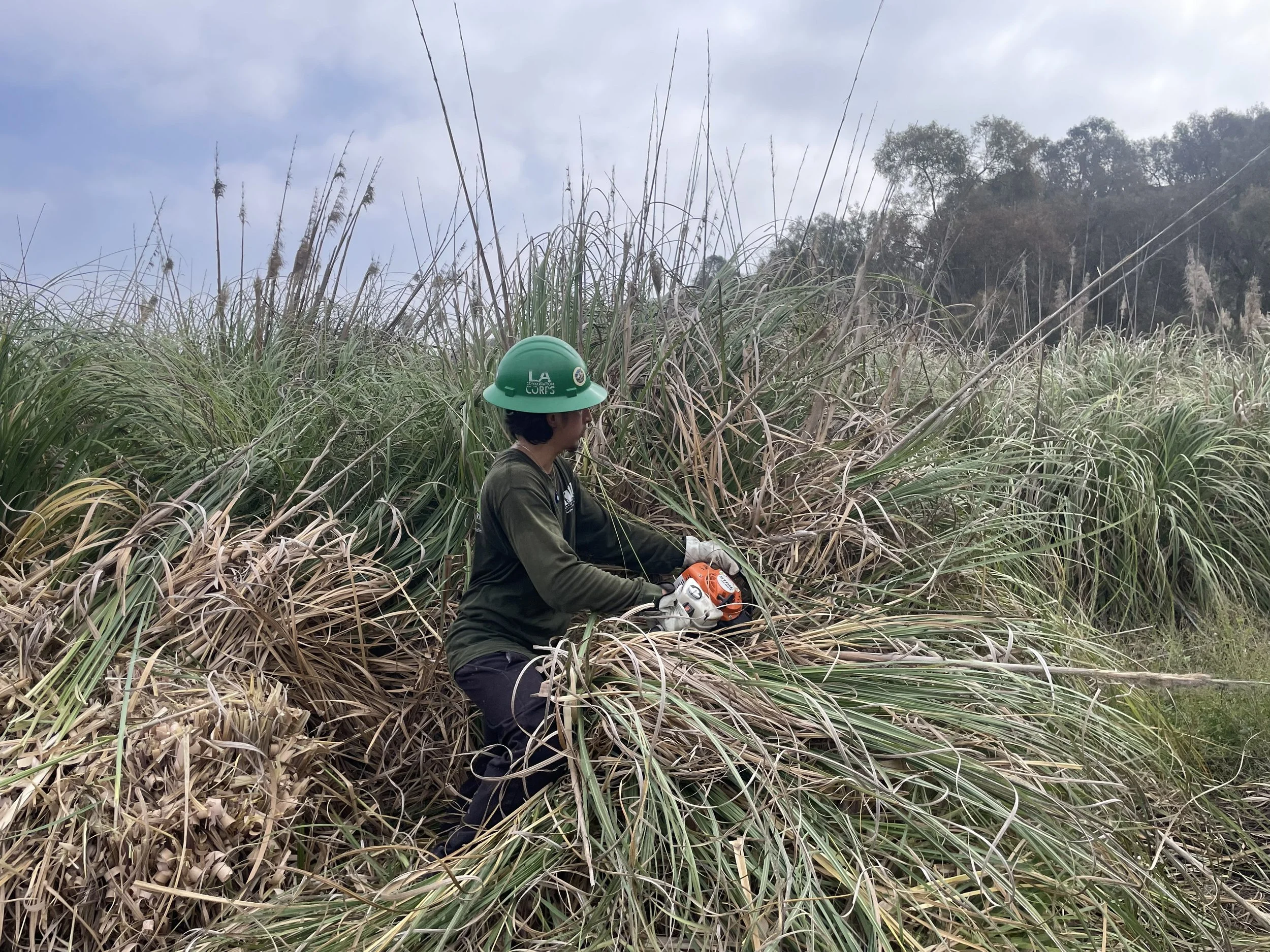
Protecting wildlife habitat also means addressing the challenges of having natural areas surrounded by urban infrastructure. Over decades, dead tree limbs and fallen trees can accumulate, brush can build up, and fire-prone invasive species like pampas grass can move in, creating potential threats to both Monarch habitat and surrounding communities. This necessitates a thoughtful, habitat-sensitive approach to reducing wildfire risk while protecting critical habitat for these incredible butterflies.
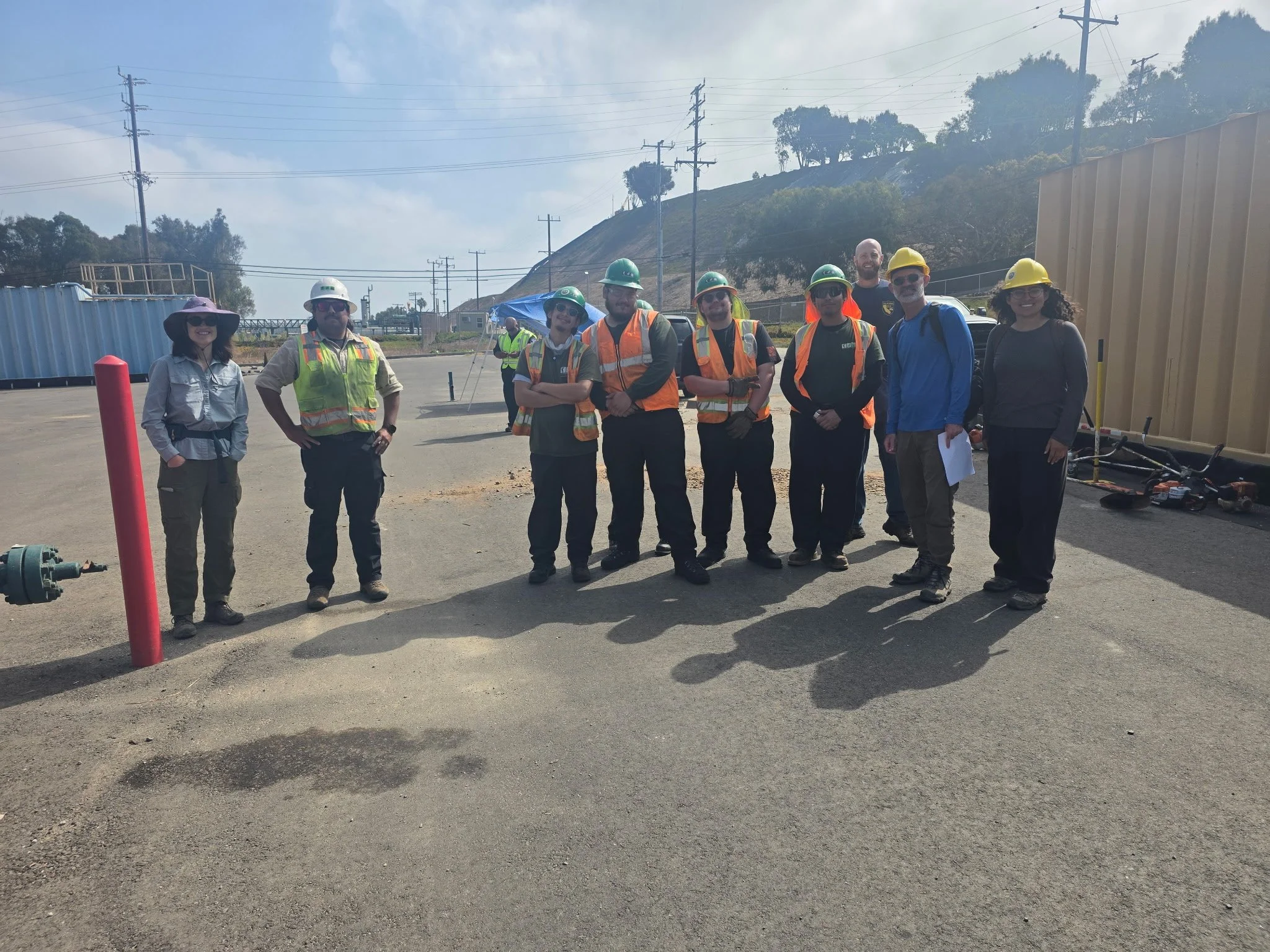
That’s where we and our amazing partners come in! To address both of these priorities, Friends of Ballona Wetlands partnered with Los Angeles Conservation Corps (LACC) and the California Department of Fish and Wildlife (CDFW) on a fuel reduction project that aims to reduce accumulated fuels and remove fire-prone invasive grasses, while being mindful of the grove’s ecological importance.
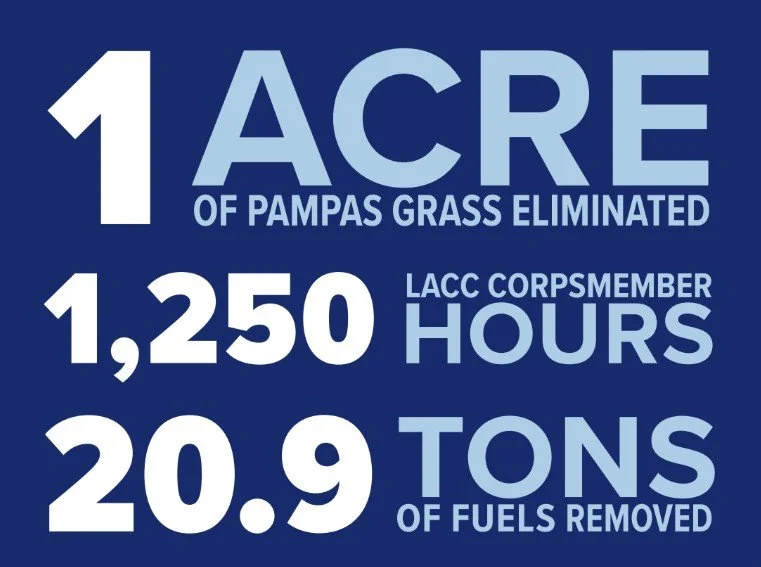
This project perfectly illustrates a central principle of urban conservation: protecting biodiversity and protecting people are NOT competing priorities! With careful planning and collaboration, we can do both. Proactive vegetation management helps reduce the risk of catastrophic wildfire while supporting the long-term resilience of this critical wildlife habitat.
At the heart of this project is partnership. LACC brings valuable workforce development and hands-on conservation experience, while CDFW provides essential oversight, expertise, and support for wildlife and habitat protection. Friends of Ballona Wetlands brings it all together, drawing on our decades of experience protecting Ballona with the support of our community.
At Ballona, conservation means more than just restoring habitat. It means taking responsibility for the health, safety, and resilience of the entire landscape. That includes the surrounding community - our community! Only by proactively investing in projects like this can we help ensure this incredible resource is here for future generations.
IT’S NOT GOODBYE, IT’S SEE YOU LATER!
by Samantha Perez, Habitat Restoration Coordinator
“Ballona is an incredible reminder you can still have thriving habitat in the heart of our communities.”
– Geoff Shawcross
Curiosity and a desire to continue learning are traits we often see in our volunteers. Embodying this curiosity is this year’s Volunteer of the Year, Ryan Koch!
Ryan began with Friends in fall 2024 as a Restoration intern. He first learned about the Friends’ restoration internship while attending the Ecological Society of America’s annual conference. There, he spoke with Friends staff and applied that same day.
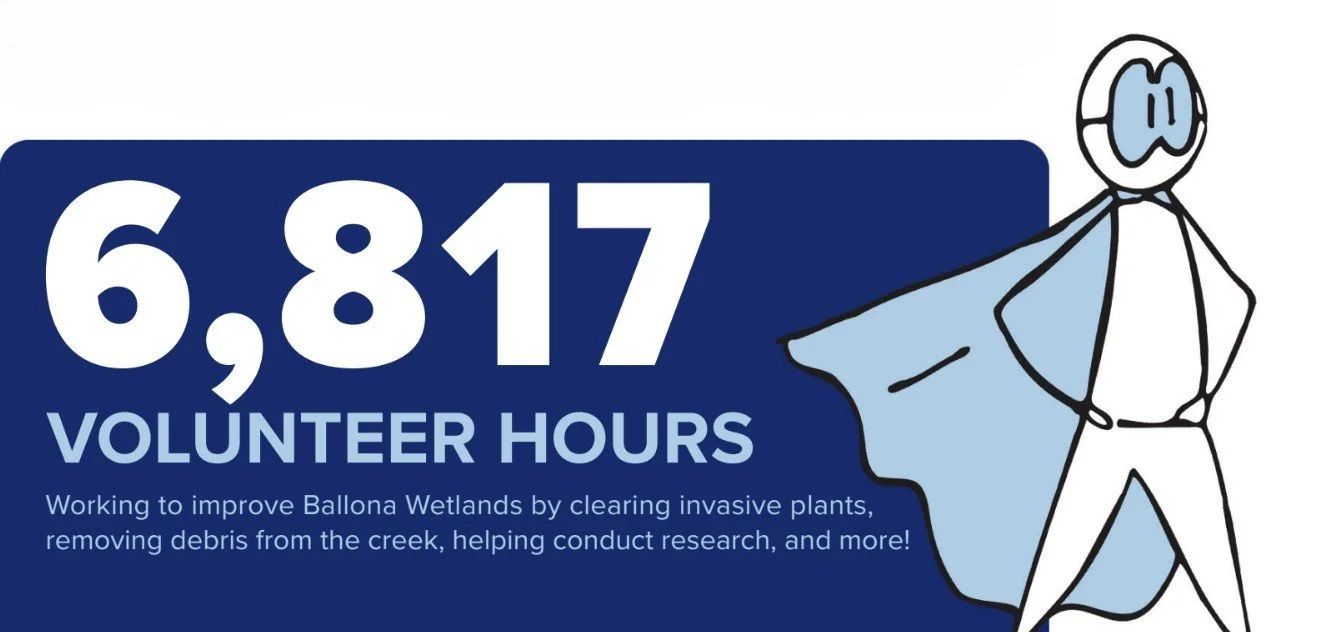
After completing the 60 hours required for his internship, he chose to continue volunteering for the next year and a half! When asked why, he gave two reasons: to gain an understanding of the logistics that support a restoration plan in each season and to learn more about the wetlands themselves. He says, “I know the common joke of ‘oh, California has no seasons!’ but that’s far from true. We have dry/wet seasons and cold/hot seasons that oscillate throughout the year, we just never see it because there’s no native habitats to reflect it. Ballona was an incredible opportunity to witness it firsthand, and I can safely say now I’ve seen real seasons in California.”
Armed with all his experience, Ryan begins his next chapter as a Master’s student in the Conservation and Restoration Science Program at UC Irvine. We wish him the absolute best and know this won’t be the last the wetlands have seen of him.
WHO CAN? ICAN!
by Samaya Rubio, Manager of Communications and Community Engagement
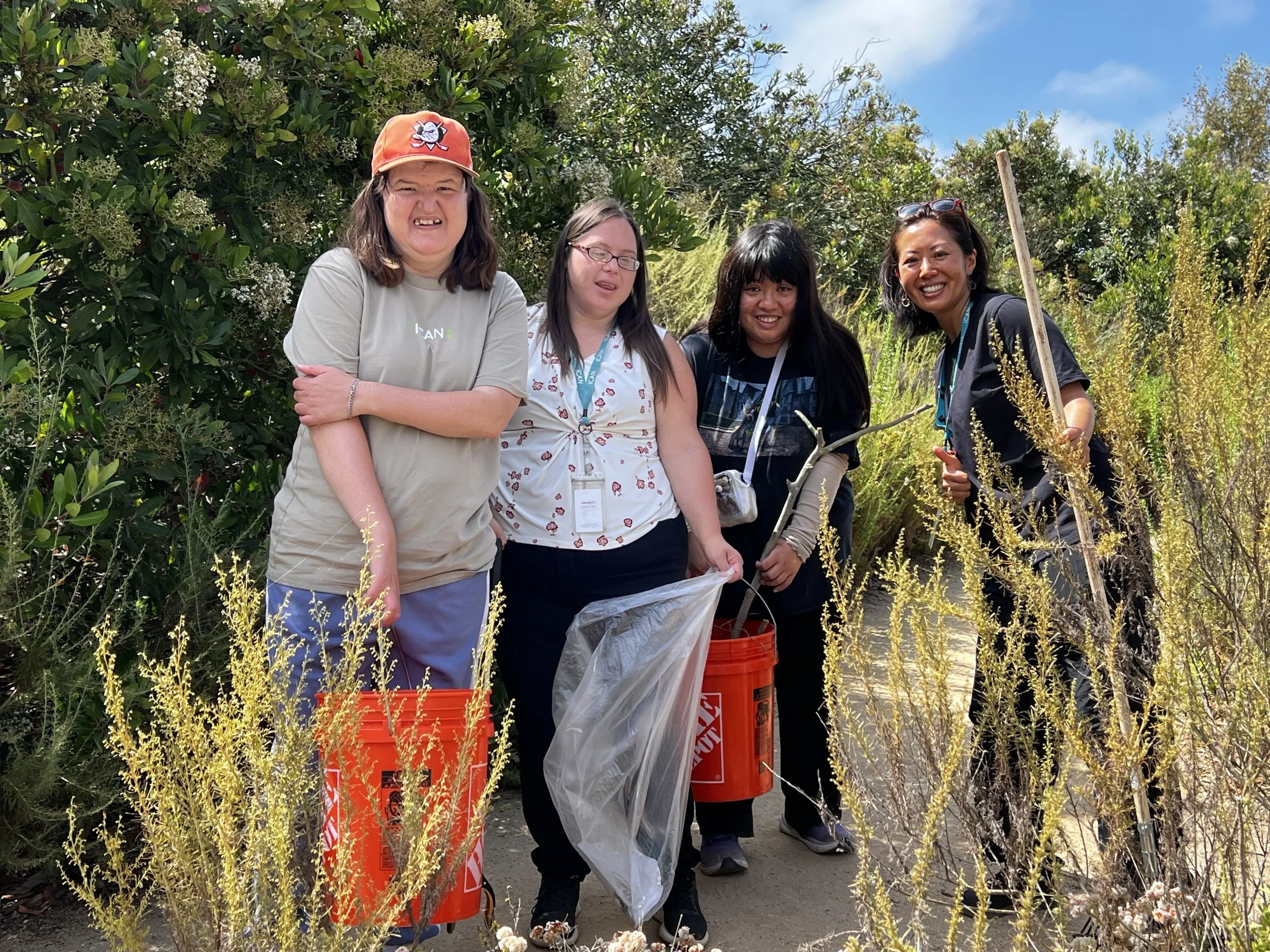
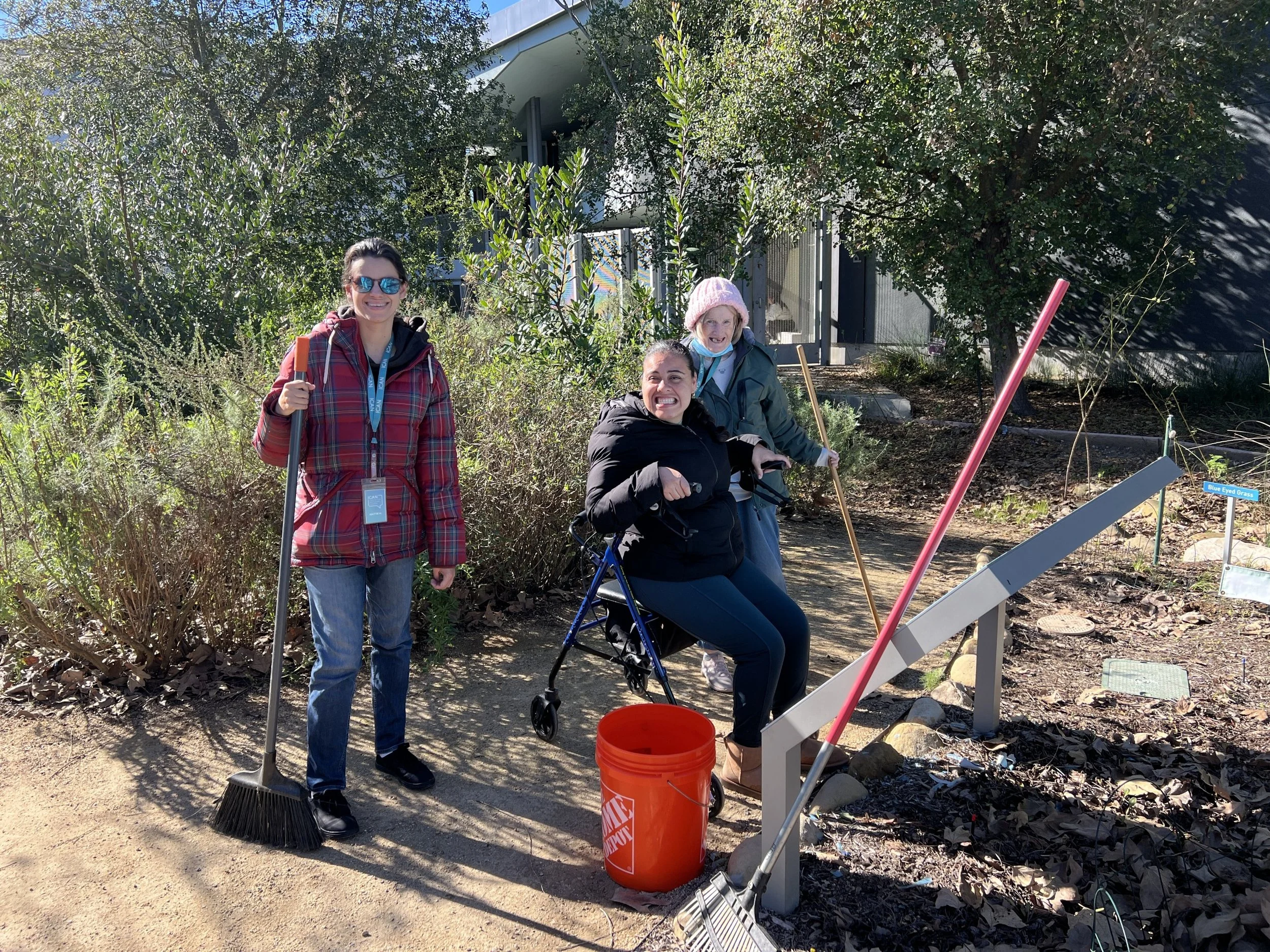
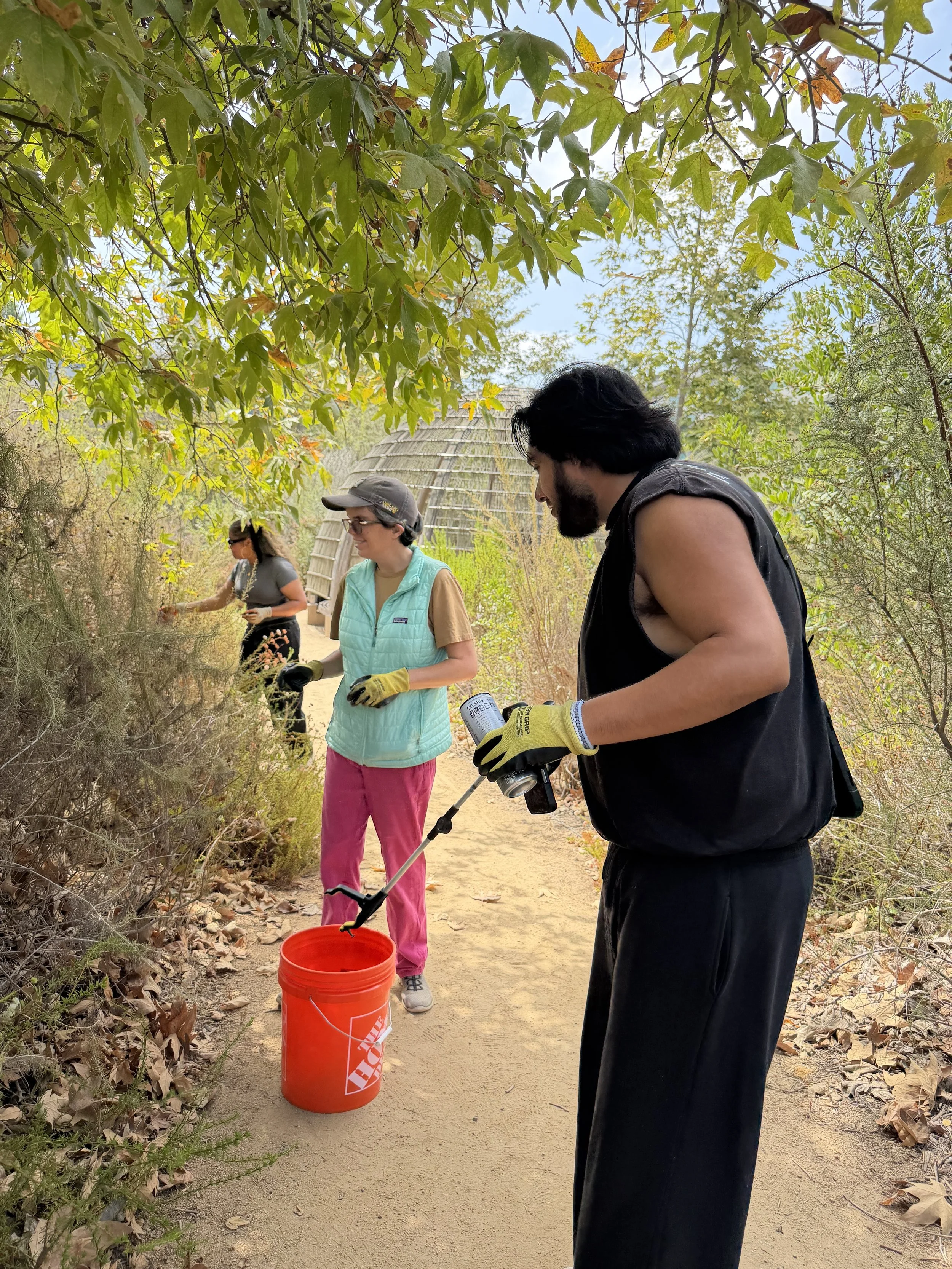
It’s a bright, sunny Tuesday morning and Ballona Discovery Park is alive with people ready to beautify it. Volunteers and staff don gardening gloves and pick up shovels, shears, and rakes, preparing for the work ahead. They are all a part of Grow Native! Gardening Club, our twice-monthly restoration day in Ballona Discovery Park caring for California native plants.
For the past two years, some of those volunteers have been clients and coaches from ICAN California Abilities Network. ICAN first connected with the Friends of Ballona Wetlands through field trips for adults with intellectual and developmental disabilities. When they reached out in search of more ways to get involved and empower their clients to develop skills, we knew Grow Native! Gardening Club would be a perfect fit!
By meticulously picking up trash, sweeping leaves from paths, and watering raised garden beds, ICAN has been instrumental in maintaining this beautiful community resource.
We hope you will join us and ICAN at Grow Native! Gardening Club!

EXPANDING HORIZONS
By Xiomara Limón, Environmental Education Coordinator
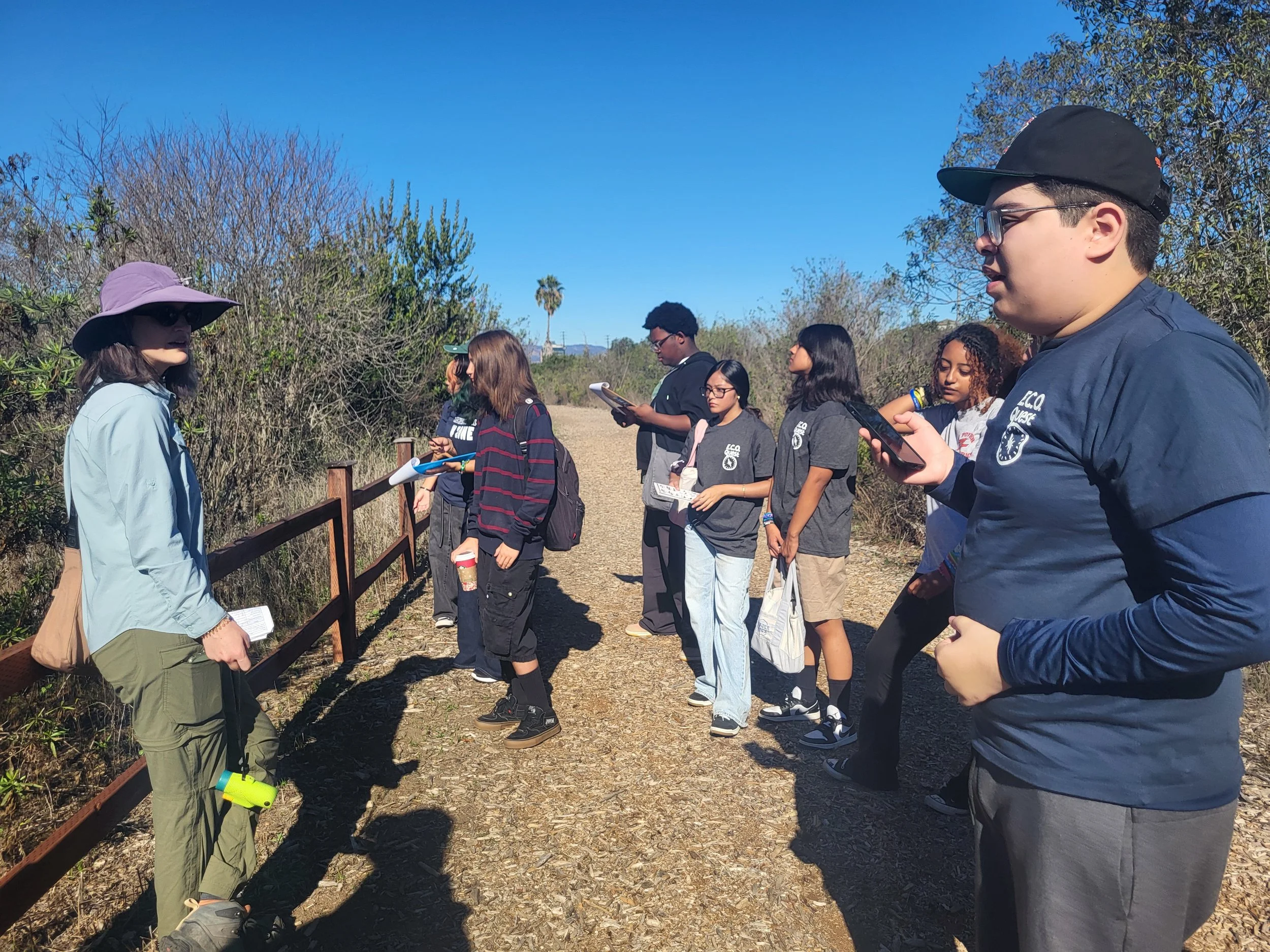
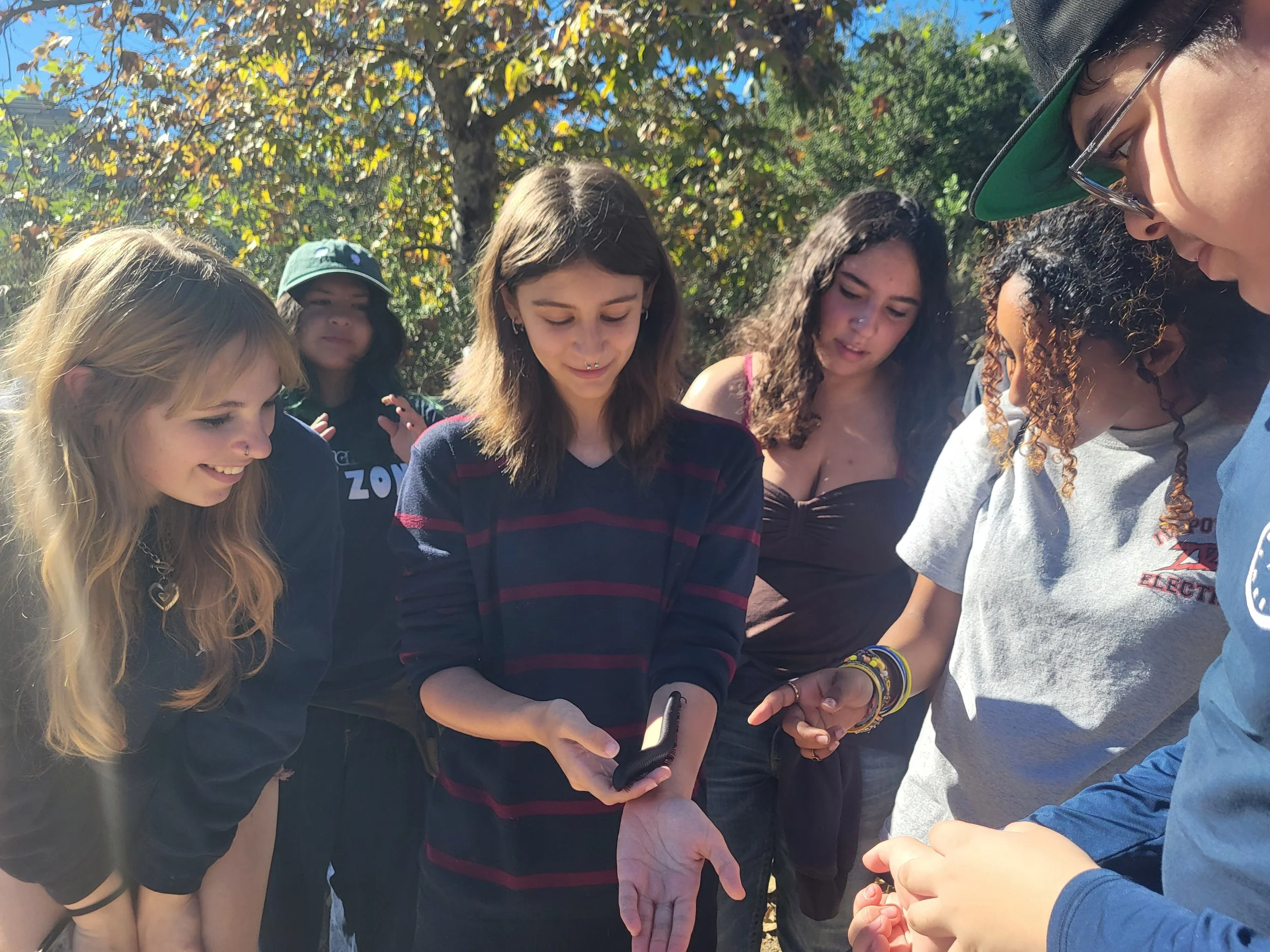
E.C.O. Quest is an exciting high school program introducing students to environmental professions and helping them discover how their interests and passions can translate into meaningful careers. This year, we were thrilled to see interest from more than 20 students! The program officially kicked off in late October in partnership with One For All - OFAkids, which generously provides its office space for our meetings.
Students are learning about environmental fields including habitat restoration, marine science, and wildlife photography, while going on exciting field trips such as whale watching and a behind-the-scenes look at the Los Angeles Zoo. Participants also explore the unique Ballona Wetlands ecosystem, gaining a deeper understanding of the importance of local habitats, biodiversity, and conservation efforts.
Beyond helping students expand their knowledge and explore potential career paths, E.C.O. Quest also focuses on creating real-world opportunities. After graduating from our program, participants can apply for a paid internship with Friends of Ballona Wetlands, where they gain valuable hands-on experience, develop professional skills, and take their next steps toward an environmental career.